Boxing
Samuel Takyi Expresses Readiness to Take Ghanaian Boxing to the Next Level

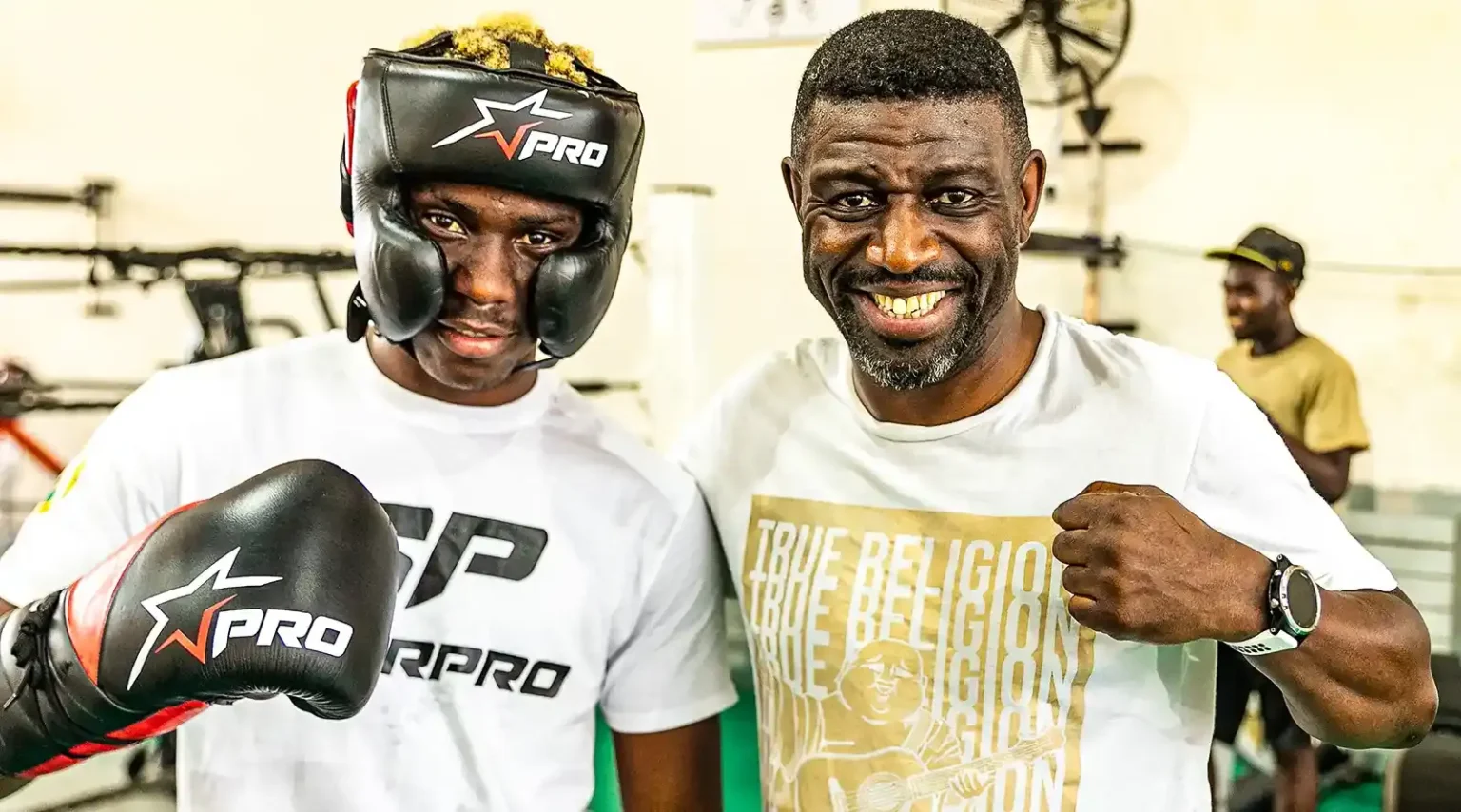
In the narrow, sun-scorched alleyways of Bukom — a gritty fishing district in Accra, Ghana — boxing is more than a sport. It’s a way of life.
This community has long been the cradle of Ghanaian boxing talent. From the humble surroundings of makeshift gyms and fraying gloves, legends like Azumah Nelson, Ike Quartey, and Joshua Clottey emerged. Now, the next chapter in that legacy is being written by 23-year-old Samuel Takyi.
Takyi first laced up gloves at just nine years old. “Growing up, life was hard for us. I come from a poor family,” he told Boxing News. “I was playing football, but a friend introduced me to a boxing club. I showed up, and there was a guy in the gym they said was their champion. I volunteered to fight him. He beat me, but a coach came over and said, ‘Hey, you can fight.’ That’s how it started.”
From that first sparring session in Bukom, Takyi’s journey led him to the delayed 2021 Tokyo Olympics, where he claimed a bronze medal—Ghana’s first Olympic medal in boxing since 1972. “In Bukom, we have a lot of hard guys,” he said with a smile. “Fighting is in our blood. We’ve produced many champions.”
In 2022, Takyi turned professional, signing with British-Ghanaian boxing manager Michael Amoo-Bediako, who has a strong track record guiding African talent to the top. Amoo-Bediako’s introduction to boxing was accidental—he met a struggling fighter looking for work and decided to support him. That fighter was Richard Commey, who would go on to become a world champion.
Amoo-Bediako, whose parents are Ghanaian, reconnected with the country during a 2010 trip, where he discovered the raw talent in its gyms—but also the glaring lack of resources. “There’s a real absence of basic equipment—gloves, rings, boots,” he said. “It breaks my heart.”
To help fill that gap, he co-founded the Streetwise Foundation with award-winning photographer Jim Fenwick, distributing donated gear from UK sponsors like BoxFit to Ghana’s young fighters.
But his work with Takyi goes far beyond material support. The blueprint is clear: build a foundation in Ghana, then bring fighters to the UK to refine their craft. “Samuel is incredibly gifted, but the technical side of boxing is often underdeveloped in Ghana,” Amoo-Bediako explained. “Now he’s working with coach Xavier Miller and sparring with top-level talent like Ahmed Hatim. He’s learning the importance of strength, conditioning, nutrition—and discipline.”
Takyi is embracing the change. “The pro game is very different from the amateurs,” he admitted. “It’s longer, harder. I’m still learning. But I have to stay focused and keep listening if I want to go far.”
Outside the ring, he’s also growing. In the UK, he’s been exposed to the business side of boxing—media, marketing, and promotion. “He came with me to the Usyk vs Dubois press conference,” said Amoo-Bediako. “It’s about giving him the full picture.”
Takyi’s next test comes on October 1 in Nigeria, where he’ll face undefeated local prospect Fatiu Ijomonim for the WBO Youth Lightweight Title, on a Chaos in the Ring card promoted by Balmoral and former world champion Amir Khan.
“I’ve learned so much here in the UK,” Takyi said. “It’s hard being away from my family, but they understand this is for them. I’m ready to get back in the ring, show what I can do, and make Ghana proud.”
The stakes are high. Just days before the fight, the Ghana Boxing Authority suspended all domestic boxing activity, leaving many fighters in limbo. While Takyi trains abroad, the pause highlights the fragile state of the sport in Ghana—and the significance of international opportunities like this one.
“This fight is about shaking off some ring rust and seeing how Samuel gels with Xavier in the corner,” said Amoo-Bediako. “But it’s also a platform to raise the profile of African boxing. That’s why having an Olympic medallist like Samuel on the card was essential.”
With no current world champions in Ghana, the hopes of a nation rest on Takyi’s shoulders. But he carries them with the confidence and grit that Bukom instills in its fighters.
His journey—from the dusty gyms of Accra to the Olympic podium and now toward world titles—represents more than personal ambition. It’s the continuation of a proud tradition, and a beacon of hope for Ghanaian boxing’s future.


Abia Govt Approves Renovation of Ojukwu Bunker, National War Museum

Top 10 Stories From Nigerian Newspapers Today — Tuesday, November 25 2025

Ogun State to Document Foreign Workers, Strengthen Security Amid Rising Threats

Top Nigeria Newspaper Headlines Today 25th June 2024 [Tuesday]

Elon Musk Nominated for 2025 Nobel Prize: His Bold Defense of Free Speech and Human Rights Rocks the World
Top Nigeria Newspaper Headlines Today 29th June 2024 [Saturday]

[VIDEO] Tinubu Stumbles while Boarding Presidential Parade Vehicle at Eagles Square

VIDEO: Yobe Residents Hold Prayer Session Over Power Cable Vandalism

You must be logged in to post a comment Login