INSECURITY
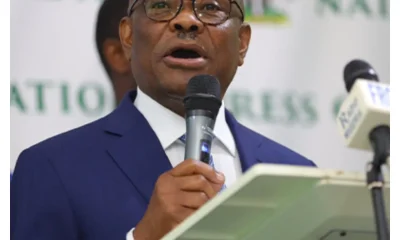
How Wike’s Security Aides Failed Him

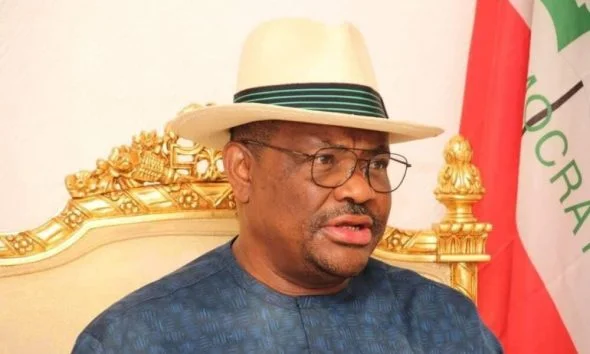

The security personnel assigned to accompany Nyesom Wike during that regrettable incident violated the most basic principle of executive protection: in a volatile situation, your primary duty is to tactically shield your principal and extract him from danger. Instead, they stood motionless—like spectators—waiting for events to unfold rather than influencing the outcome.
Well-trained protection officers would have immediately secured the perimeter, placed their principal at the center of the formation, and guided him away from the needless confrontation that had the potential to escalate into violence. What we witnessed instead was a clear failure of protocol—an episode where professionalism should have prevailed but was overrun by confusion, emotion, and inaction.
Executive protection goes far beyond blaring sirens, escorting VIPs, or parading with starched uniforms and automatic rifles. It demands tact, intelligence, anticipation, and emotional discipline. Effective protection relies not on intimidation but on foresight; not on reactive posturing but on proactive management of the environment.
I recall an incident around 2010 during my service as an aide to the late Minister of Health, Prof. Babatunde Osotimehin, which sharpened my appreciation for the professionalism of the DSS. The minister’s vehicle accidentally struck an okada rider in Lere, Kaduna State, sparking immediate chaos. Bystanders surged angrily toward the convoy.
Shola Aguda, the Chief Detail, acted with exceptional ingenuity: he used the official driver as a decoy, moving the minister into the driver’s seat. In the ensuing confusion, the minister slipped unnoticed through the driver’s door and blended into the crowd. In a single, calculated maneuver, the DSS officer defused a potentially fatal situation—without drawing a weapon or raising his voice.
When we regrouped later and asked how he managed it, his answer was simple but profound:
“My first responsibility is to protect my principal from harm or embarrassment.”
That is precisely where Wike’s security detail fell short. They watched passively as their principal drifted into a self-inflicted spectacle. Aides to politically exposed persons (PEPs) must understand that their duty includes guiding, moderating, and—when necessary—restraining their principals for their own safety and dignity.
This failure is not unique to Nigeria. Around the world, executive protection has moments of triumph and collapse.
In 2018, for example, when a perceived threat emerged during President Donald Trump’s rally in Nevada, the Secret Service reacted within seconds—forming a human shield, scanning for danger, and whisking the president off stage. Only after ensuring absolute safety did they allow him to return. That is high-level protection—precise, disciplined, and discreet.
Contrast that with the 1981 assassination attempt on President Ronald Reagan. While the incident exposed vulnerabilities, it also showcased the instinctive brilliance of Agent Jerry Parr, who shoved Reagan into the limousine—only later realizing the president had been shot. His moment of instinctive decisiveness saved a life.
Japan offers a harsher example. The 2022 assassination of former Prime Minister Shinzo Abe highlighted the catastrophic cost of hesitation. The security detail’s delayed response allowed the assailant a clear second shot. In a country renowned for precision, that lapse was considered unforgivable—proof that a single moment of indecision can alter national history.
Nigeria has had its own tragedies. The 2001 assassination of former Attorney General Bola Ige was partly attributed to a breakdown in his personal security coordination. He had dismissed his police guards shortly before his murder—an error no competent aide should have allowed. Protection requires not just muscle, but judgment and the courage to override a principal’s misplaced confidence.
The role of a security aide is far more than carrying arms or walking beside a VIP. It demands reading human behavior, sensing rising tension, and tactfully steering a principal away from danger. A true protection professional understands that preserving dignity can be as critical as preserving life.
Unfortunately, many security aides today are mere “yes-men”—present but not perceptive, obedient but not strategic. They are escorts, not protectors. Like the police officer seen exchanging words with a naval rating in a recent viral video, they fail to grasp the core rule: when protecting a PEP, you do not escalate a confrontation—you dissolve it and secure your principal first.
Consider a recent example from the United Kingdom. When protesters unexpectedly surged toward Prime Minister Rishi Sunak’s convoy in Manchester, his security detail reacted with subtle precision. One aide quietly pivoted the prime minister away while another cleared a discreet exit into a nearby building. The maneuver was so seamless that many observers only realized what had happened afterward. That is protection of both the individual and the institution.
Nigeria’s security and paramilitary details urgently require enhanced training in emotional intelligence, situational awareness, and behavioral management. Protection is as much about understanding your principal’s temperament as it is about responding to external threats.
Had Wike’s aides possessed this level of professional discipline, they would have intervened early—steering him from the cameras, the conflict, and the court of public judgment. Instead, they allowed a fleeting moment of agitation to mushroom into a national embarrassment.
Because security is not only about safeguarding life—
It is also about safeguarding reputation.
FOLLOW US









Uzor Arukwe Finally Responds to Rumours of Destroying BamBam’s Marriage

Eucharia Anunobi Finally Reacts to ‘Husband Snatcher’ Allegations

Top Riders set to Compete in 2026 USEF Combined Driving National Championships at Live Oak International

Top Nigeria Newspaper Headlines Today 25th June 2024 [Tuesday]

Elon Musk Nominated for 2025 Nobel Prize: His Bold Defense of Free Speech and Human Rights Rocks the World
Top Nigeria Newspaper Headlines Today 29th June 2024 [Saturday]

[VIDEO] Tinubu Stumbles while Boarding Presidential Parade Vehicle at Eagles Square

VIDEO: Yobe Residents Hold Prayer Session Over Power Cable Vandalism

You must be logged in to post a comment Login