EDUCATION
Students, Parents React as Imo Govt Bans Frequent Textbook Changes in Schools

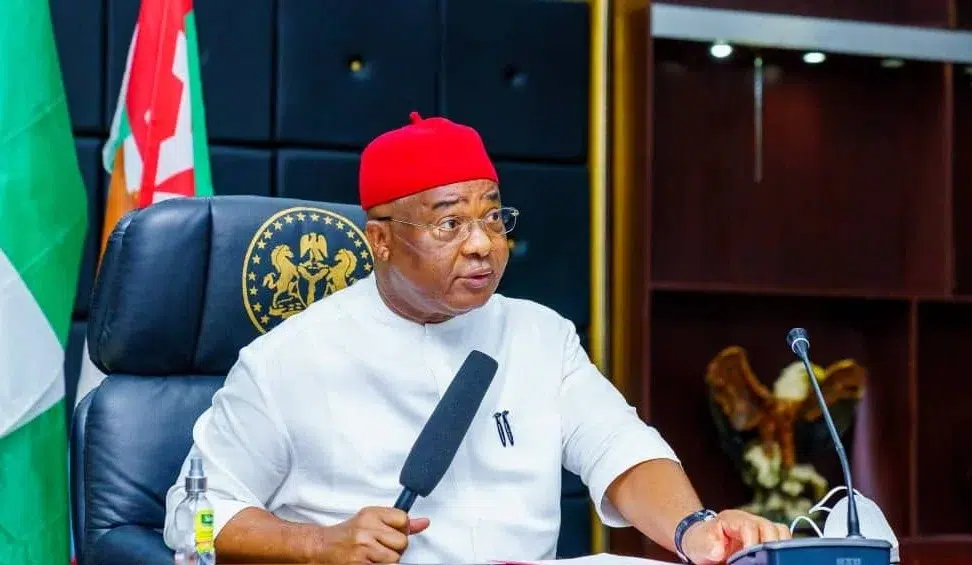
The Imo State Ministry of Education has announced a ban on the frequent change of textbooks in both private and public schools across the state, as part of measures aimed at easing financial pressure on parents and guardians.

The policy, introduced by the Commissioner for Primary and Secondary Education, BTO Ikegwuoha, also prohibits the conduct of graduation ceremonies for certain categories of students in schools within the state.
In a statement issued to journalists, the commissioner said the directive was designed to address the economic challenges faced by families responsible for funding their children’s education. He noted that the ministry had issued a strict warning to school authorities, emphasizing that compliance with the new policy is mandatory.
According to the directive, graduation ceremonies are not permitted for Kindergarten, Nursery, and Junior Secondary School 3 students. Only pupils in Primary 6 and students in Senior Secondary School 3 are allowed to hold graduation events, with schools barred from imposing any levies for send-off ceremonies.
The policy further prohibits students in Primary 1 to 5, Junior Secondary School 1 to 3, and Senior Secondary School 1 to 2 from being compelled to contribute funds toward farewell or graduation events organised for other students. While graduating pupils in Primary 6 and SSS 3 may make private arrangements with their families, schools are expressly forbidden from organising, supervising, or collecting money for such events.
On the issue of textbooks, Ikegwuoha stated that the ban on what he described as arbitrary and frequent changes remains in effect until 2030. He stressed that schools must not compel parents to purchase new editions or entirely new textbooks annually for profit-driven reasons.
He added that approved textbooks must remain in use for a minimum period of four years, with a new list of state-approved materials scheduled to be introduced in August 2026 and to remain valid until August 2030.
The commissioner warned that any private school found violating the directives risks severe sanctions, including the withdrawal of operating licences and removal from the state’s register of approved schools.
FOLLOW US







Top 10 Stories From Nigerian Newspapers Today — Friday May 15, 2026

Apple iPhone 11 Price in Nigeria

Apple iPhone XS Max Price in Nigeria

Elon Musk Nominated for 2025 Nobel Prize: His Bold Defense of Free Speech and Human Rights Rocks the World

Top Nigeria Newspaper Headlines Today 25th June 2024 [Tuesday]
Top Nigeria Newspaper Headlines Today 29th June 2024 [Saturday]

[VIDEO] Tinubu Stumbles while Boarding Presidential Parade Vehicle at Eagles Square

VIDEO: Yobe Residents Hold Prayer Session Over Power Cable Vandalism

You must be logged in to post a comment Login